

Discover the best things to do in Cantabria, Spain with my 3-day itinerary. From caves to coastlines, get tips for an unforgettable trip.
My obsession with the Northern Spain is continuing. This time we headed to Cantabria for a couple of days to escape Madrid.
Just 4 hours by car and you’re surrounded by lush nature, sea, and mountains. The air feels fresher, the pace slows down, and every turn in the road reveals something new. Between the little coastal towns, hidden caves, and rolling green hills, it’s the kind of place that makes you want to stay longer than planned.
Here’s how we spent three days exploring Cantabria.
Where is Cantabria?
Cantabria is a small but striking region in the north of Spain, tucked between Asturias (👉🏻check out my 7-day itinerary in Asturias for more tips on what to do in the region) to the west and the Basque Country to the east. To the south it borders Castilla y León, while its northern edge meets the Bay of Biscay with rugged cliffs and sandy beaches. The capital is Santander, a lively coastal city that often serves as the main entry point for visitors.
Getting there is simple: from Madrid it’s about a four-hour drive, with highways that cut straight through the mountains. There are also direct trains, and Santander has its own airport with connections to major Spanish and European cities. Once you arrive, the best way to explore is by car, since many of the most beautiful spots are scattered across the coastline and valleys.
What is Cantabria known for?
Cantabria may be small, but it has an incredible mix of nature, history, and food that makes it stand out. Here are some of the things that give the region its charm:
- It’s known as part of “Green Spain” thanks to its rolling hills, lush valleys, and mild, rainy climate.
- The coastline is full of surprises, from wide golden beaches to tiny fishing villages where life still revolves around the sea.
- Cantabria is famous for its caves. Altamira is called the “Sistine Chapel of Prehistoric Art,” and there are dozens more hidden beneath its hills.
- Food is central to life here: fresh anchovies from Santoña, cocido montañés (a hearty mountain stew), local cheeses, and seafood straight from the Bay of Biscay.
- Life moves at a slower pace. It’s quieter than many touristy regions, so you’ll find more space to soak up the scenery and the rhythm of local life.
My 3-day itinerary in Cantabria
We went to Cantabria on a Friday afternoon from Madrid so we could spend two full (or two and a half, shall I say) days in the region. It isn’t a lot of time considering how many things there are to do, but since that was all we had, we tried to make the most out of it.
Day 1: Exploring Riocorvo, Cartes, and Torrelavega
We arrived in Cantabria around 5 PM and checked into Posada Seis Leguas, a cozy boutique hotel in the village of Riocorvo. The hotel sits right in the heart of Cantabria, between the mountains and the sea, and feels designed for slowing down—with a pool, a peaceful garden, homemade breakfasts, and rooms that open up to views of the surrounding hills. The goal of this short break was to stay away from bigger cities, so Riocorvo was perfect for us.
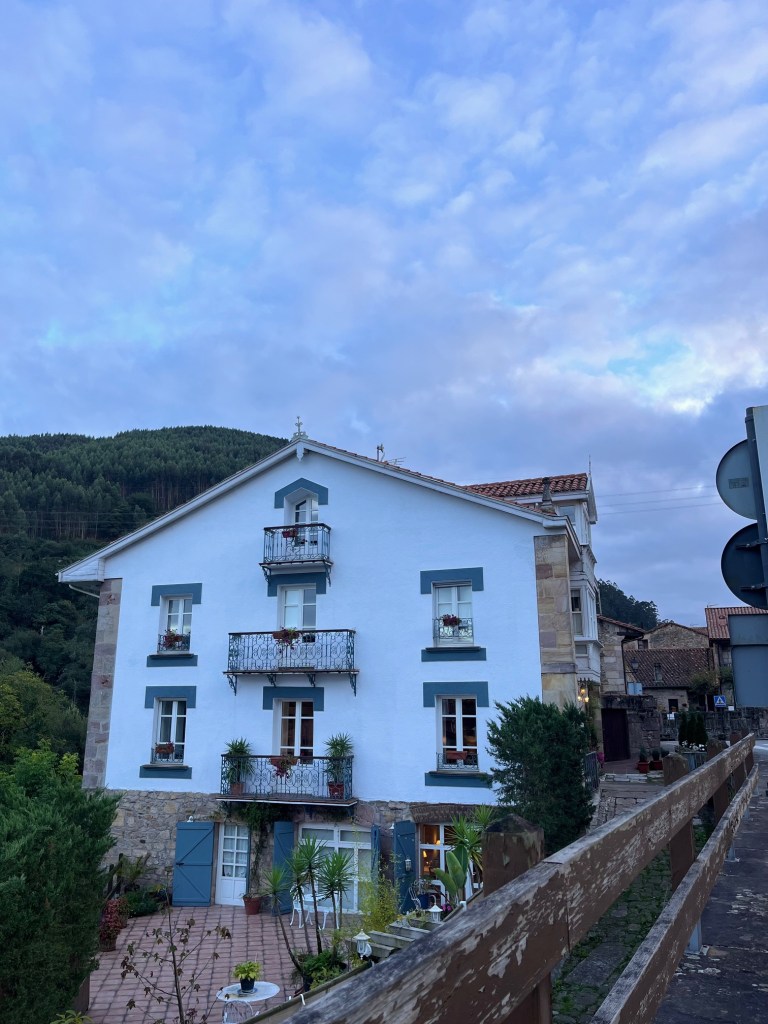
After dropping off our bags, we headed out to explore Riocorvo itself. This tiny village is often listed among the most beautiful in Cantabria, thanks to its well-preserved stone houses, balconies lined with flowers, and its location along the old Camino Real. We loved it a lot!
From there, we took a paseo along the Besaya River, which runs right past the village, and followed the path until we reached Cartes. Cartes is known for its medieval heritage, especially the twin stone towers at the entrance of the old town, which once guarded the road to Santander. Its cobbled streets, traditional mansions, and arcaded houses give it a distinctly historic charm.
As the evening set in, we made our way to Torrelavega, the second-largest city in Cantabria. It has a much more urban feel compared to the small villages, and it’s a good place to end the day with a proper dinner. We ate at La Oveja Eléctrica, a lively spot that mixes creative tapas with classic Spanish flavors—the perfect way to wrap up our first evening in Cantabria.

Day 2: Biking to Suances and visiting Gaudí’s El Capricho
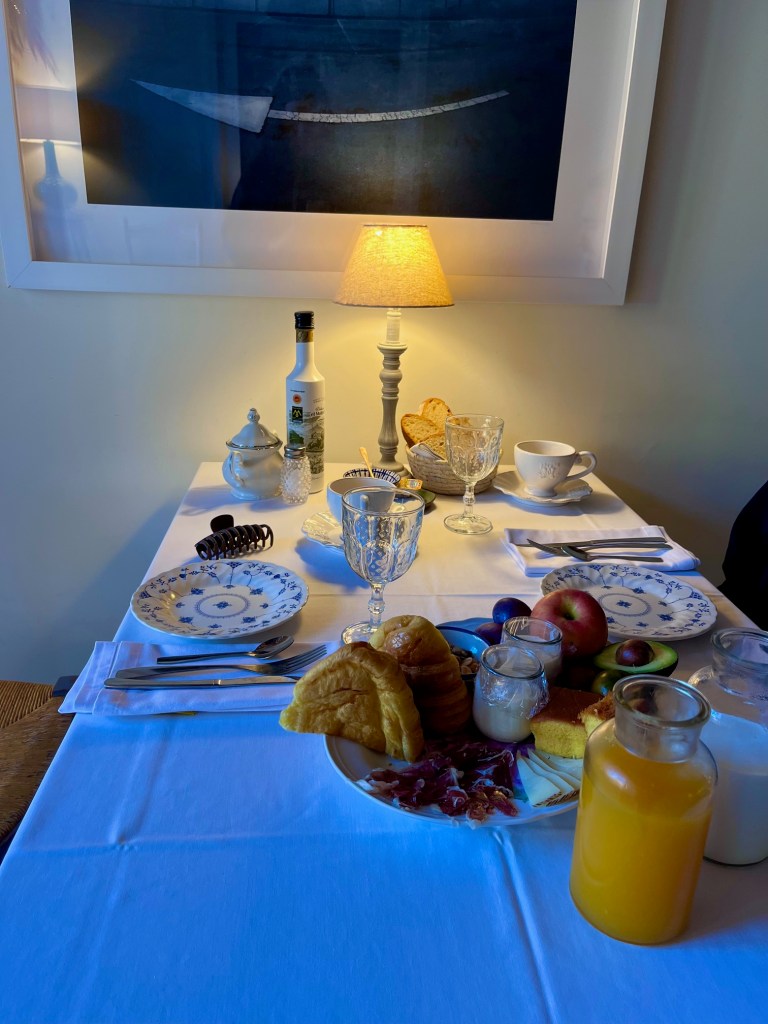
We woke up to a calm Cantabrian morning and started the day with a homemade breakfast at our hotel. The spread was full of local produce such as fresh bread, regional cheeses, jams, and fruit. It was the kind of breakfast that makes you want to linger before setting off.
The hotel offers bikes, so we decided to ride to Suances, a seaside town about 18 km away. The route follows the Besaya River for much of the way, which makes the ride both scenic and relaxing. Surrounded by greenery and with the sound of the river beside us, it felt like the perfect way to see more of Cantabria at a slower pace.
When we arrived, Suances was just as charming as we had hoped. It is known for its wide beaches, dramatic cliffs, and a lively harbor where fishing boats still come and go. Even on a cloudy day the views of the coastline were beautiful.
By the afternoon the rain started coming down, so we looked for something a little more sheltered. That is when we decided to drive to Comillas to see one of the region’s most unique landmarks: El Capricho de Gaudí. Built in the late 19th century, this whimsical villa is one of the few works by Antoni Gaudí outside of Catalonia. The tickets were €7/person and included an audio guide.
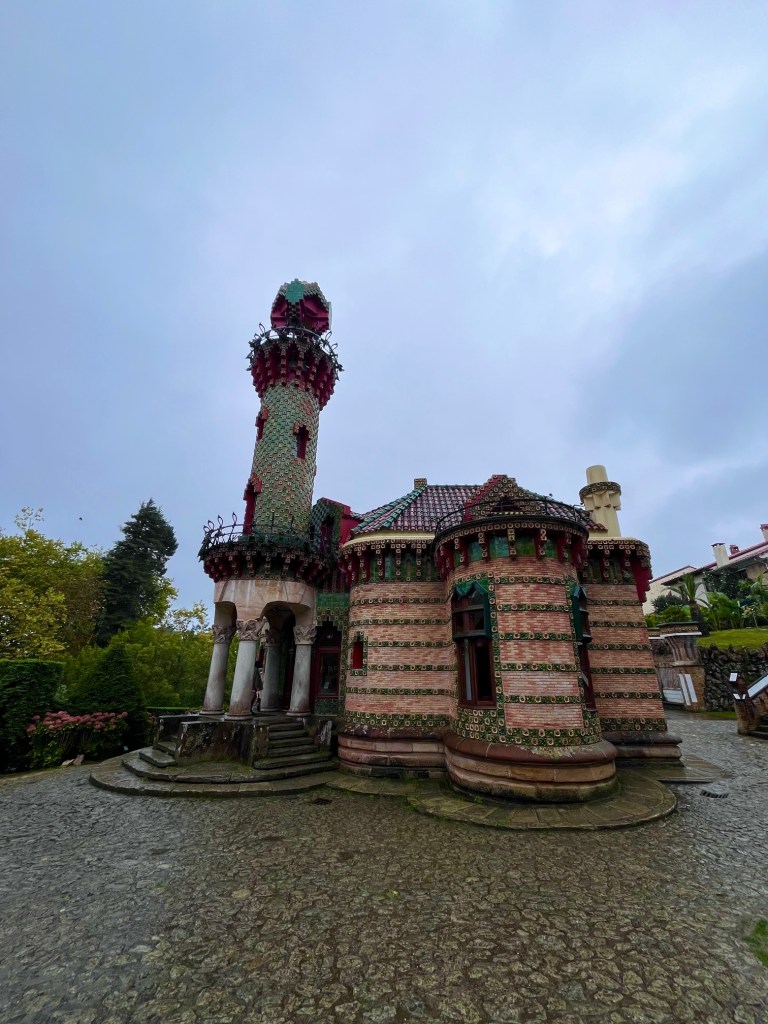
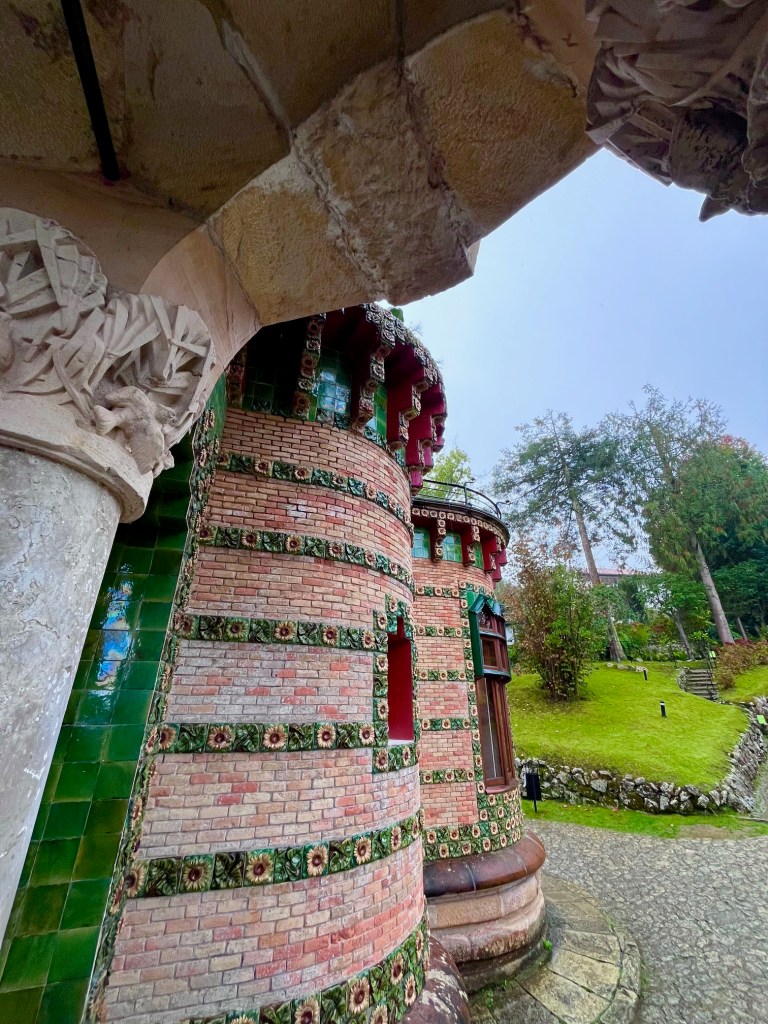
Covered in bright ceramic tiles with sunflower motifs, it feels playful and eccentric, a perfect reflection of Gaudí’s style. Exploring the house and its gardens was the ideal way to spend a rainy afternoon while still enjoying Cantabria’s cultural side.
Afterwards, we headed back to our hotel, where the owners had prepared us a freshly cooked dinner. Sitting down to a homemade meal in such a warm and welcoming setting was the perfect way to end the day.
Day 3: Visiting cueva El Pendo and the coast at Liencres
Our last day in Cantabria began with another relaxed breakfast at the hotel, before setting out to explore a mix of history and coastline.
In the morning we visited Cueva El Pendo, one of the most stunning prehistoric caves in the region and a UNESCO World Heritage Site. The cave itself is enormous, with a huge entrance chamber that immediately gives you a sense of its scale. Inside, you follow a guided tour that brings the history of the cave to life. Our guide explained the importance of the red ochre paintings, which include deer, horses, and other animals, some over 20,000 years old. The way the figures glow under the soft cave lighting makes it feel like you’re looking at an ancient gallery that has been perfectly preserved.
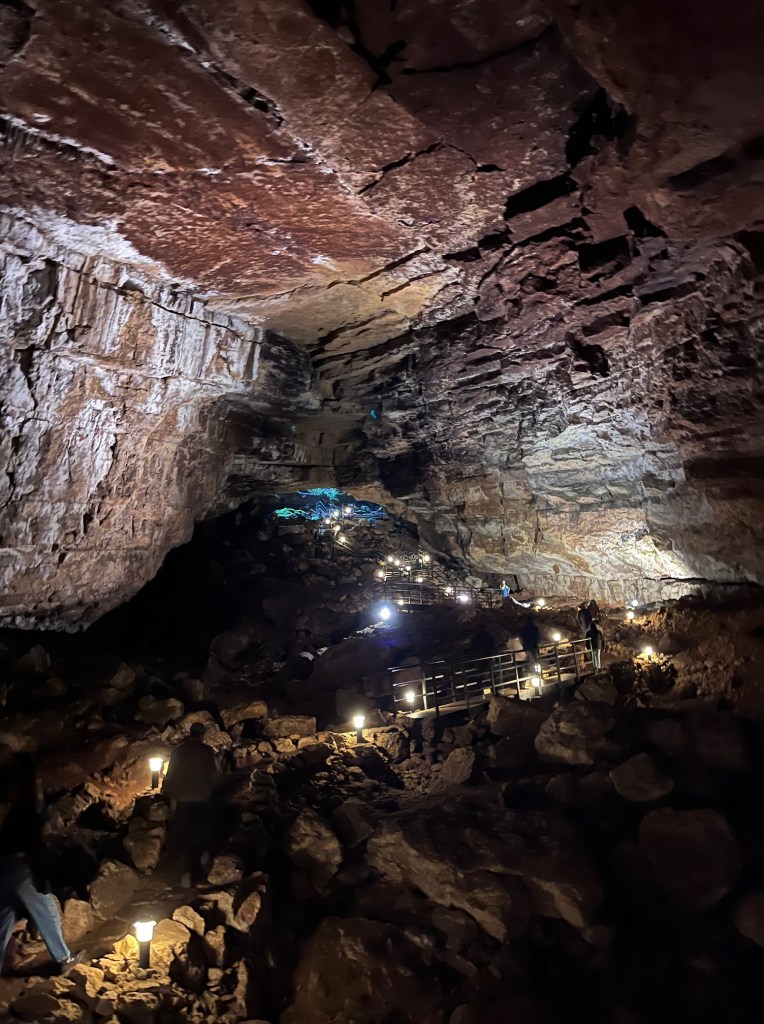
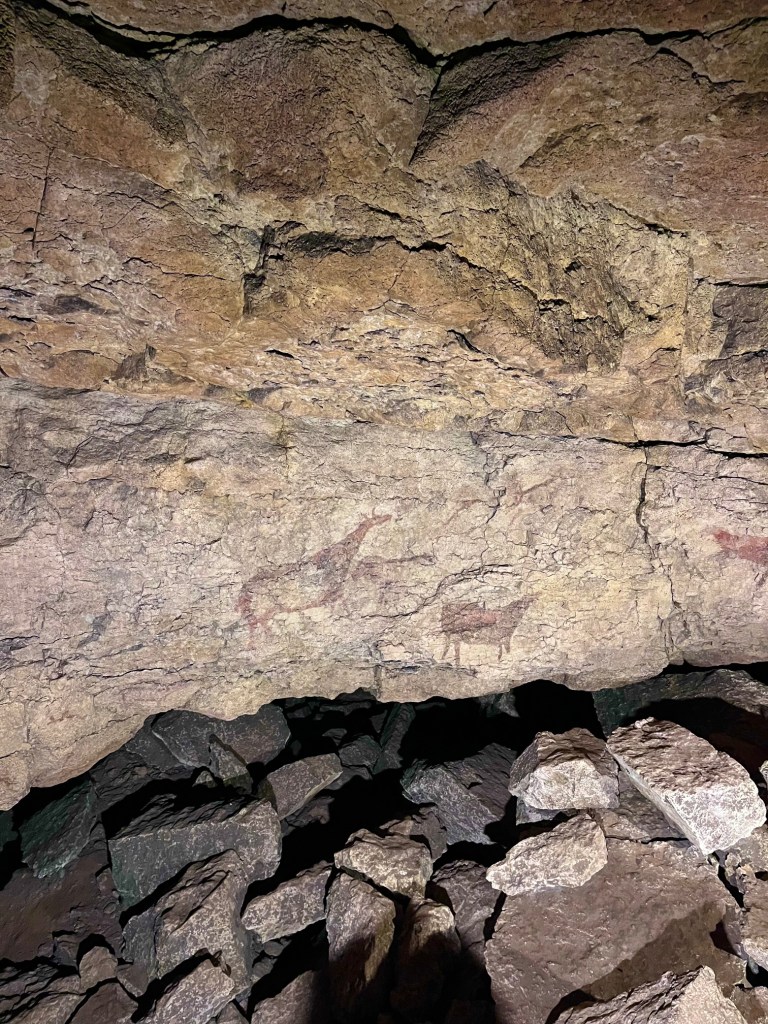
Visits are strictly controlled to protect the paintings, so only a limited number of people are allowed in at each time slot. You need to buy tickets in advance through the Cultura de Cantabria website (they cost around €15/person) or directly at the cave’s visitor center, but it is highly recommended to book online as spaces sell out quickly. The tour lasts about 45 minutes, and having a guide makes the whole experience much more immersive and memorable.
After the cave visit, we wanted to spend the rest of the day outdoors, so we headed to the coast for a walk along the Senda por los Pinares de Liencres. This scenic trail winds through tall pine forests with the smell of resin in the air before opening up to sweeping views of the Playa de Liencres, one of the most beautiful beaches in Cantabria. The contrast between the dramatic cliffs, golden dunes, and wild Atlantic waves made it the perfect finale to our trip.
In the evening we returned to the hotel and then walked into nearby Cartes to visit a gourmet shop called El Torreón – Productos Gourmet de Cantabria. There we picked up some local honey and blueberry tea. Blueberries are widely cultivated in northern Spain, particularly in Asturias and Cantabria, so it felt like the perfect way to take a little piece of the region home with us.
On Monday morning we woke up early and drove back to Madrid.
FAQs about Cantabria
When is the best time to visit Cantabria?
Spring and summer are ideal for beach days and hiking in the mountains. From May to September, average temperatures range from 18°C to 25°C (64°F to 77°F), making it warm without being too hot. Autumn offers beautiful colors and fewer crowds, with temperatures between 12°C and 20°C (54°F to 68°F). Winter is quieter but wetter, with averages of 8°C to 14°C (46°F to 57°F), so it’s better for cozy village stays and cultural visits.
Do you need a car to explore Cantabria?
Yes, a car is highly recommended. Public transport exists but many of the best villages, caves, and trails are easier to reach by driving.
Is Cantabria touristy?
Not as much as nearby regions like the Basque Country. It’s still considered part of “Green Spain” and feels more relaxed, with fewer crowds and more local charm.
How much does food cost in Cantabria?
Eating out in Cantabria is very affordable compared to many other parts of Spain. A “menú del día” (fixed lunch menu) usually costs between €10 and €20. A casual dinner in a local restaurant will set you back around €10-15 per person, while a three-course meal for two in a mid-range restaurant is typically €35-60. Daily food costs can range from €25 to €50+ per person depending on where and what you eat.
What are the average hotel prices in Cantabria?
Hotel prices vary a lot depending on location and season. Budget stays start from around €55-60 per night, mid-range hotels average about €90-100, and more upscale or beachfront options are closer to €130+ per night. On average, most travelers spend about €80-100 per night for a comfortable 3-star hotel.
We’ll be back
This time we didn’t make it to Santander, since we wanted to spend more time in nature and the smaller towns. That just means we will have to come back to explore the capital of the region and more of its coastal villages. Even with only a few days, Cantabria turned out to be the perfect break from Madrid and exactly what we needed to recharge our batteries.
Have you ever visited Cantabria? Share your experiences in the comments—I’d love to hear your favorite spots.
¡Hasta luego! 👋🏻
 sloly travel | travel slower. discover deeper.
Leave a comment