
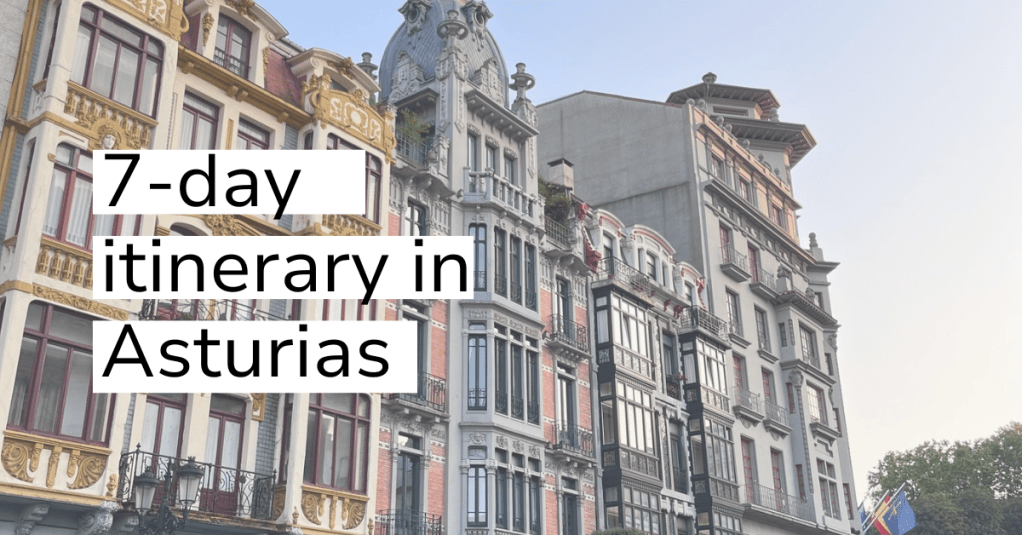
I’ve traveled all over Spain, but nowhere gripped me like Asturias. Check out my 7-day Asturias itinerary packed with activities.
Two years ago, I thought I had seen all of Spain.
I’d lived in four different cities and explored everywhere from Murcia to Gibraltar, Barcelona to Madrid. But somehow, I had never made it to Asturias—until last year. And when I finally did? I fell completely in love with it. To be honest, I’m now kind of obsessed.
Spaniards had always told me Asturias was something special—and they were right. In this guide, I’ll share the must-see places and can’t-miss experiences from my travels in the region.
Interesting facts about Asturias
Before we dive into the itinerary, here are a few things that make Asturias unlike anywhere else in Spain:
- It’s known as “Green Spain” thanks to its lush landscapes and mild, rainy climate. You’ll see more cows🐮ྀིthan cars in some places—and that’s part of the charm.
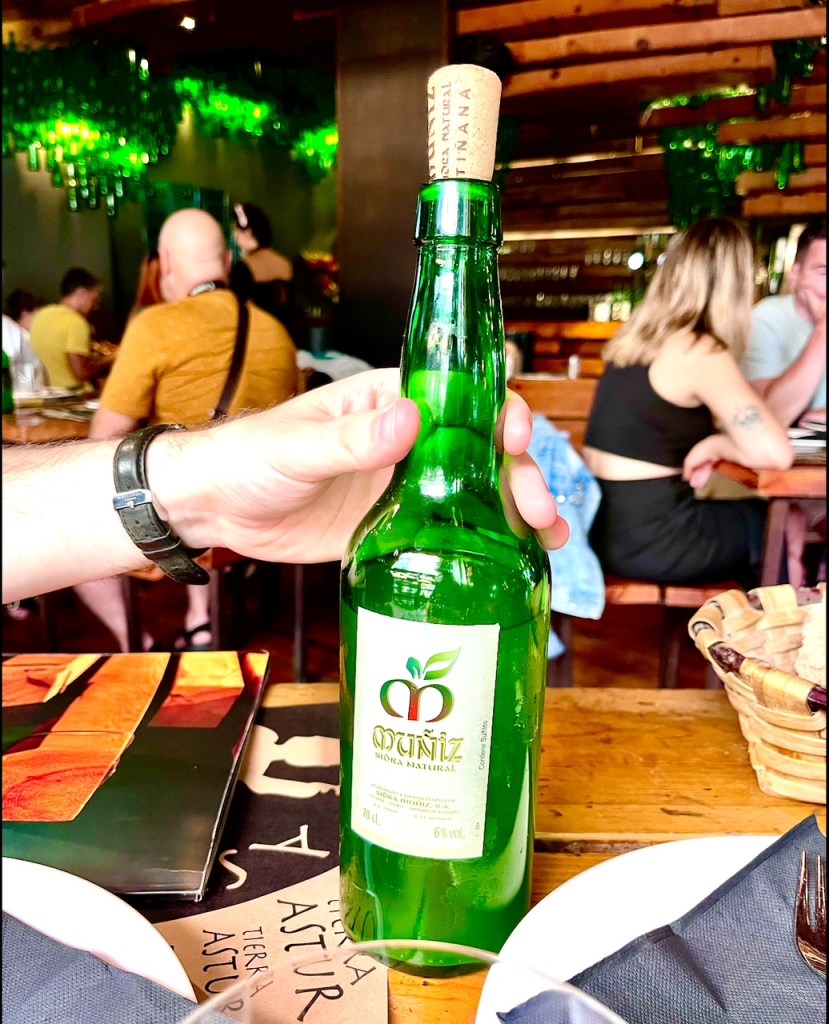
- Asturias is cider country. Locals drink sidra from wide glasses, pouring it from high above their heads in a dramatic ritual called escanciar.
- Asturias is home to wild brown bears. The Cantabrian Mountains are one of the last refuges for wild bears 🐻 in Western Europe.
- Asturians love their local festivals. From medieval fairs to cider-pouring competitions, every town seems to have its own celebration.
- The food is rich, rustic, and wildly underrated. From fabada asturiana (a hearty bean stew) to smoky Cabrales cheese, this is comfort food heaven.
- Asturias is quieter than other tourist regions. It’s still relatively off the beaten path, so you’ll find fewer crowds—and more authenticity.
So, what should you see in Asturias? Let’s jump straight into my 7-day itinerary.
7-day itinerary for the best places to visit in Asturias, Spain
Day 1: Explore Oviedo
Last year, we started our Asturias trip in Oviedo—the capital of the autonomous community, and a city I instantly wished I’d visited sooner.
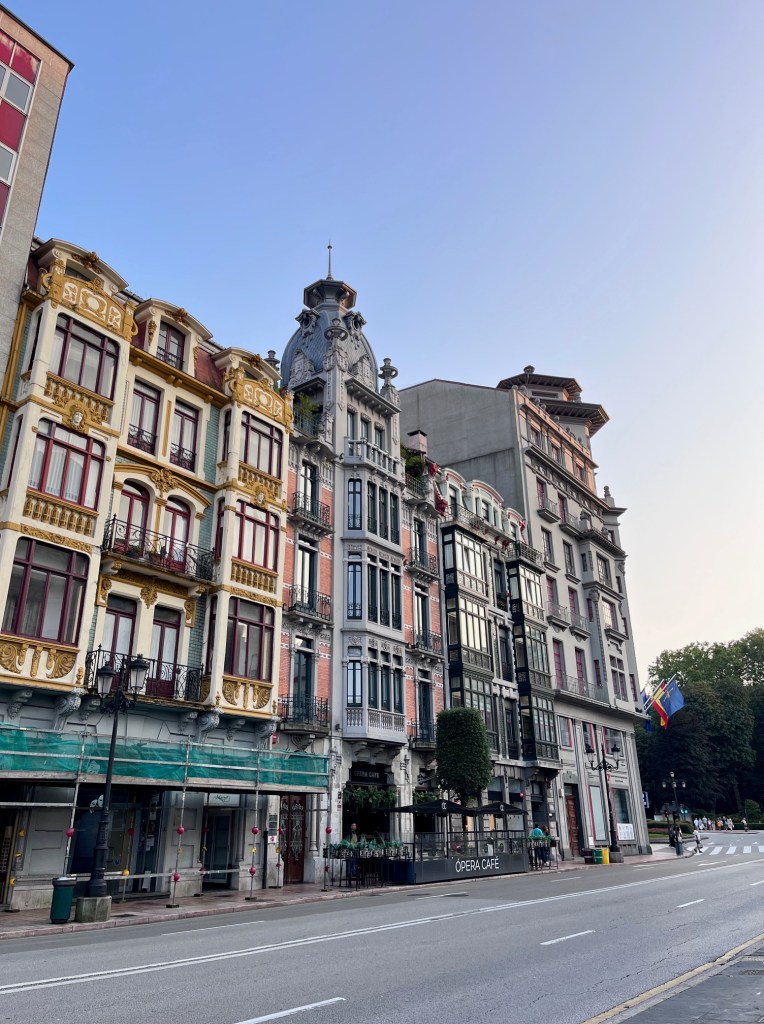
Oviedo is home to around 217,000+ people, but it feels more like an oversized town than a bustling city. It’s clean, elegant, and deeply traditional—with a mix of medieval streets, baroque churches, and a proud literary legacy (yes, this is the setting for La Regenta, one of Spain’s great novels). It’s also known for being part of the Camino de Santiago, and for its cider culture, which you’ll quickly learn is not just a drink here—it’s a ritual.
Morning: Strolling the old town and cathedral
We began our day wandering the Old Town’s polished stone streets, which feel almost museum-like in their preservation. The Cathedral of San Salvador is a must—especially the Camara Santa, which houses relics that pilgrims have revered for centuries. Keep an eye out for quirky statues scattered through the streets, including one of Woody Allen, who famously loves Oviedo.
Afternoon: Art museums and peacocks in the park
After a bite, we ducked into the Museum of Fine Arts of Asturias—a total gem and completely free to enter. You’ll find classic Spanish painters alongside modern Asturian works, all in a beautiful historic building. From there, a short walk takes you to Campo de San Francisco, the city’s massive central park filled with fountains, sculptures, and even peacocks.
Evening: Cider and tapas on calle Gascona
When the sun dipped, we headed to Calle Gascona, also called “La Ruta de la Sidra”—a street lined with traditional cider houses. Watching the ritual escanciado pour (cider splashing into the glass from head height) is reason enough to come.
We ordered local cheeses, spicy chorizo cooked in cider, and crisp tortos—and honestly, it was one of the best meals of the trip.
Day 2: Head to the Lakes of Covadonga
While Oviedo is super pretty, if you’re heading to Asturias for its stunning nature, then make sure to head straight into the Picos de Europa to visit the legendary Lakes of Covadonga.
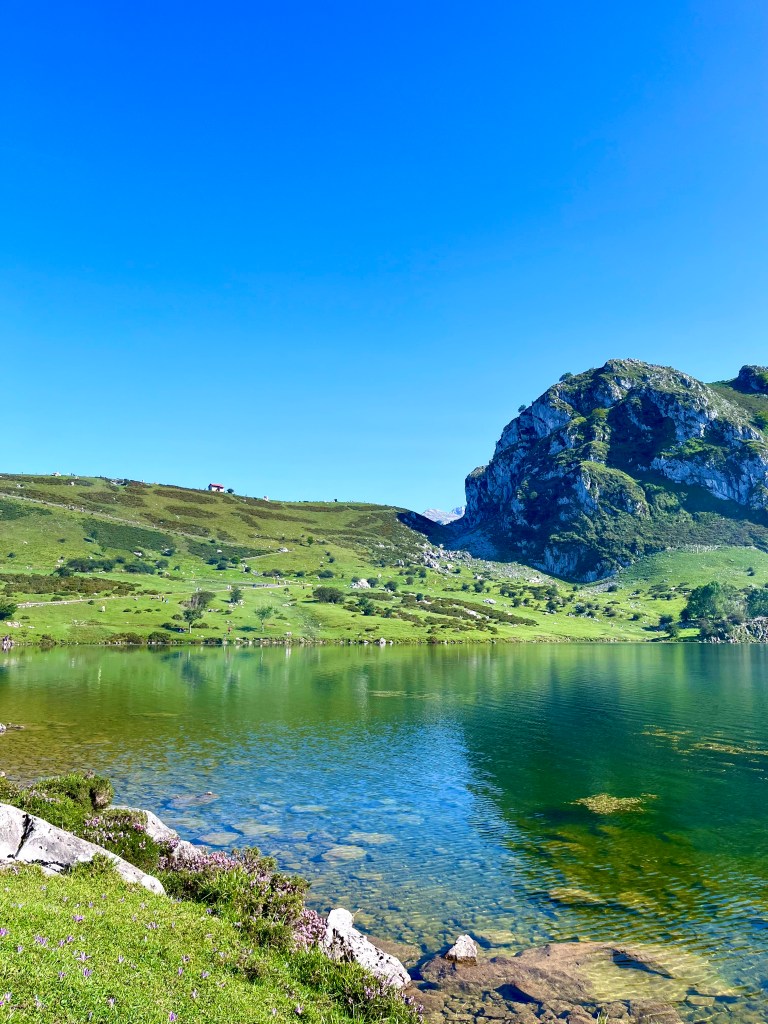
Start your day in Covadonga, a tiny mountain village with a dramatic sanctuary built right into the rock. From there, follow the winding road that climbs into the clouds toward three glassy glacial lakes, surrounded by grazing cows, sweeping views, and total stillness.
If you want all the details—when to go, how to get there, and why it’s so special—I wrote a full guide on everything you need to know about traveling to the lakes of Covadonga.
Day 3: Drive to Las Arenas de Cabrales
After visiting Covadonga, make your way to Las Arenas de Cabrales—a peaceful mountain village and an ideal base for hiking in the Picos de Europa. It’s also the heartland of Cabrales cheese, so you’re in the right place for food lovers, too.
From here, you can easily access the start of the Ruta del Cares, one of the most spectacular trails in all of Spain. Even if you don’t walk the entire route, doing just a section will reward you with dramatic cliffs, narrow rock tunnels, and unreal valley views.
After your hike, treat yourself to an unforgettable meal at Casa Xurde.

Tucked away in Las Arenas town, the restaurant serves beautifully plated Asturian dishes with a twist—think scallops with charcoal salt, slow-cooked lamb, and the most indulgent chocolate cake with raspberry ice cream. It’s one of those rare places where every dish surprises you.
Day 4: Take the Funicular to Bulnes & head up to Sotres
On day 4, head to Poncebos and catch the Funicular de Bulnes, a unique cable train that runs inside the mountain through a long tunnel. It’s the only way to reach the tiny village of Bulnes without hiking, and once you arrive, you’ll understand why it’s considered one of the most remote places in Spain. The silence, the views, and the untouched mountain atmosphere make it something special.
After exploring Bulnes, head further into the peaks by driving up to Sotres, the highest village in Asturias. It’s a rugged, no-frills kind of place—but the setting is jaw-dropping and the road trip up is an adventure in itself.
Finish the day back in Las Arenas with a meal at La Bikina. Their wood-fired meats and warm mountain vibe made it one of our top food finds of the whole trip.
Day 5: Go kayaking in Panes
If you’re craving a change of pace and a bit of adventure, head to Panes, a small village near the eastern edge of Asturias. It’s one of the best spots for kayaking in the region, thanks to the scenic and beginner-friendly Río Deva.
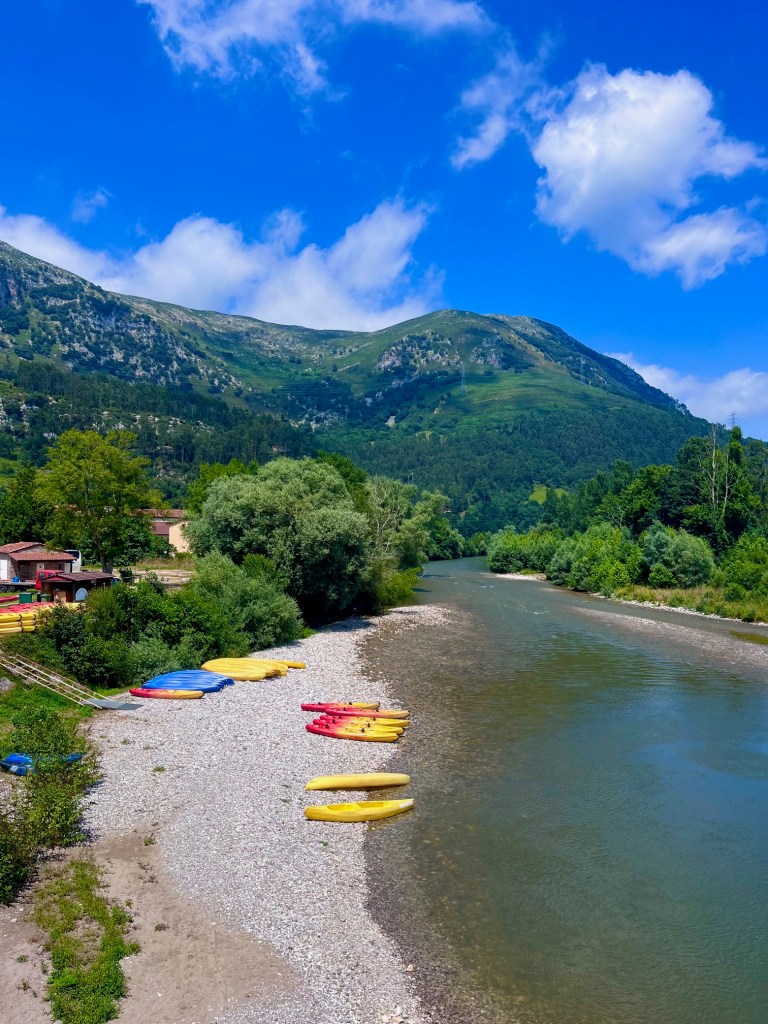
You can book a half-day paddle with one of the local companies. We used Canoe Aventura Trophy. They provide all the gear, a dry bag, and shuttle service back to the starting point—super easy. You’ll have the option to stop along the riverbanks for a swim or picnic, so bring water shoes and a change of clothes.
Day 6: Go off-roading
For something adventurous and totally different, head to Infiesto, Asturias and book a buggy tour with RbAventura. We did a one-hour route with the owner of the company, and since we were the only ones booked, it ended up being a private tour—super personal and relaxed.
We rode deep into the mountains along forest paths, splashing through streams, climbing rocky trails, and even spotting wild horses along the way. The buggies were surprisingly easy to handle—I was worried that they’ll be hard to drive.
If you do go with RbAventura, just be aware that the tours are in Spanish only, so if you don’t speak the language, you may want to look for an English-speaking guide elsewhere.
Later in the day, you can grab lunch or dinner in town or in one of the nearby villages for a more relaxed afternoon.
Day 7: Visit coastal towns
After a few days in the mountains, head back toward the coast for a change of scenery. Start with a visit to Avilés, an underrated town known for its beautifully restored old town and the ultra-modern Centro Niemeyer—a cultural space that looks like it landed from the future.

From there, make your way to Lastres, one of the most picturesque fishing villages in Asturias. The narrow, sloping streets and pastel houses overlooking the sea are straight out of a movie (and in fact, it was one—“Doctor Mateo” was filmed here!).
If you have time and the tide is right, swing by the Bufones de Pría, a stretch of rugged coastline where seawater shoots through blowholes in the cliffs—like natural geysers, especially dramatic on stormy days.
✈️ How to get to Asturias
The easiest way to get to Asturias is by flying into Asturias Airport (OVD), located about 40 minutes from both Oviedo and Gijón. There are regular flights from Madrid, Barcelona, and some major European cities. Alternatively, you can arrive by train or bus from other parts of Spain—though it may take longer, especially from the south.
If you’re already in northern Spain (Cantabria, León, or Galicia), driving into Asturias is a scenic and straightforward option.
🚗 How to get around
To truly explore Asturias, you’ll want to rent a car. Many of the best experiences—mountain villages, clifftop trails, hidden beaches—are in areas without public transport access. Roads are good overall, but expect winding drives and narrow lanes in the mountains. Google Maps works fine for navigation, and parking is usually easy outside of big cities.
💶 Meal costs in Asturias
Asturias is incredibly budget-friendly by European standards:
- €10–15 for a menú del día (daily set lunch)
- €20–35 per person for dinner at a mid-range restaurant
- €3–4 for a glass of cider and a tapa in a local sidrería
The food is filling, delicious, and often enough to share.
FAQs about Asturias
What should I do in Asturias when it rains?
Rain is part of the deal in Asturias, but it doesn’t have to ruin your plans. Visit Oviedo’s museums, relax in a café, tour a cheese or cider producer, or take a scenic drive through the countryside. Just bring a raincoat and go with the flow.
When is the best time to visit Asturias?
May–June or September are great for good weather and fewer crowds. July and August are warmer but busier. Autumn brings beautiful foliage in the mountains.
Do I need to speak Spanish to travel around Asturias?
Not strictly, but basic Spanish helps, especially in small towns. A few key phrases can go a long way in restaurants, petrol stations, and with tour guides.
Is Asturias good for families with kids?
Yes—kayaking, hiking, beaches, funicular rides, and wildlife sightings make it great for kids. It’s a low-stress, slow-travel kind of place.
What should I pack for Asturias?
Pack for mixed weather: layers, waterproof gear, sturdy walking shoes, and something warm for cooler nights. Don’t forget swimwear in summer.
Can I visit Asturias without a car?
You can see the cities without a car, but to explore nature, villages, and hidden spots, renting a car is highly recommended.
Is Asturias worth visiting for tourists?
Absolutely. Asturias is one of Spain’s most underrated regions, offering dramatic coastlines, lush mountains, rich food culture, and far fewer crowds than more touristy areas. It’s perfect for nature lovers, road-trippers, and anyone looking for something authentic.
Here you have it…
If Asturias has been on your radar but you haven’t visited it yet, now is the time.
For us, it was truly the place to embrace slow travel—winding roads, remote hikes, quiet villages, and zero rush.
¡Hasta luego! 👋🏻
 sloly travel | travel slower. discover deeper.
Leave a comment